Maximizing Housing Resources
A linear optimization model, with sensitivity analysis, for allocating shelter beds during Vancouver's homelessness crisis.
In March 2020 at least 2,095 people in Vancouver were homeless, far more than the city’s shelters had beds for. With Max Ahluwalia, I built a linear program to work out the most people Vancouver’s 19 shelters could house on a single night, and how far short that falls.
The model
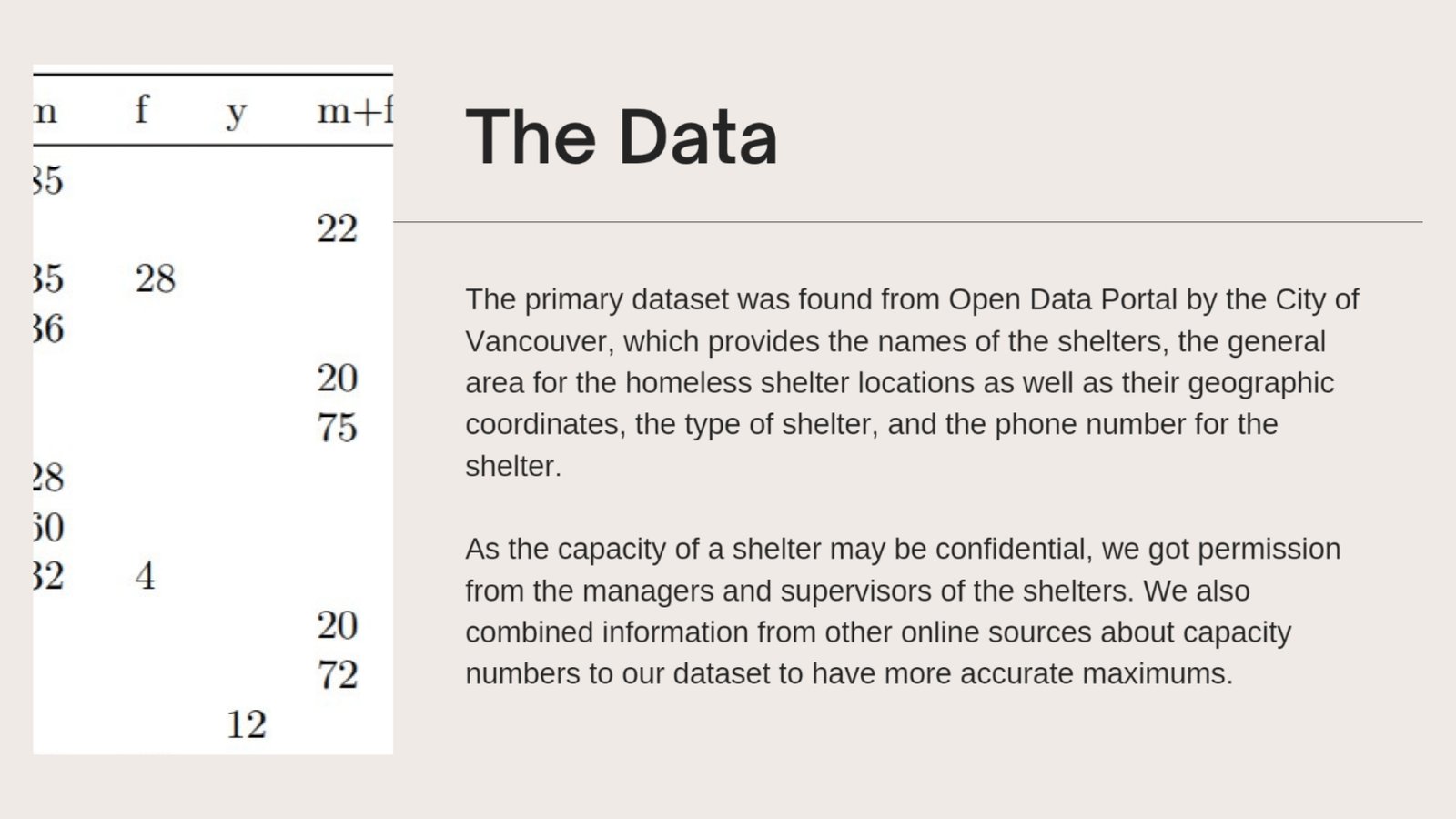
Shelter locations and types came from the City of Vancouver’s open data portal. Capacities are often confidential, so we got permission from shelter managers to use their numbers and filled the remaining gaps from other 2020 sources.
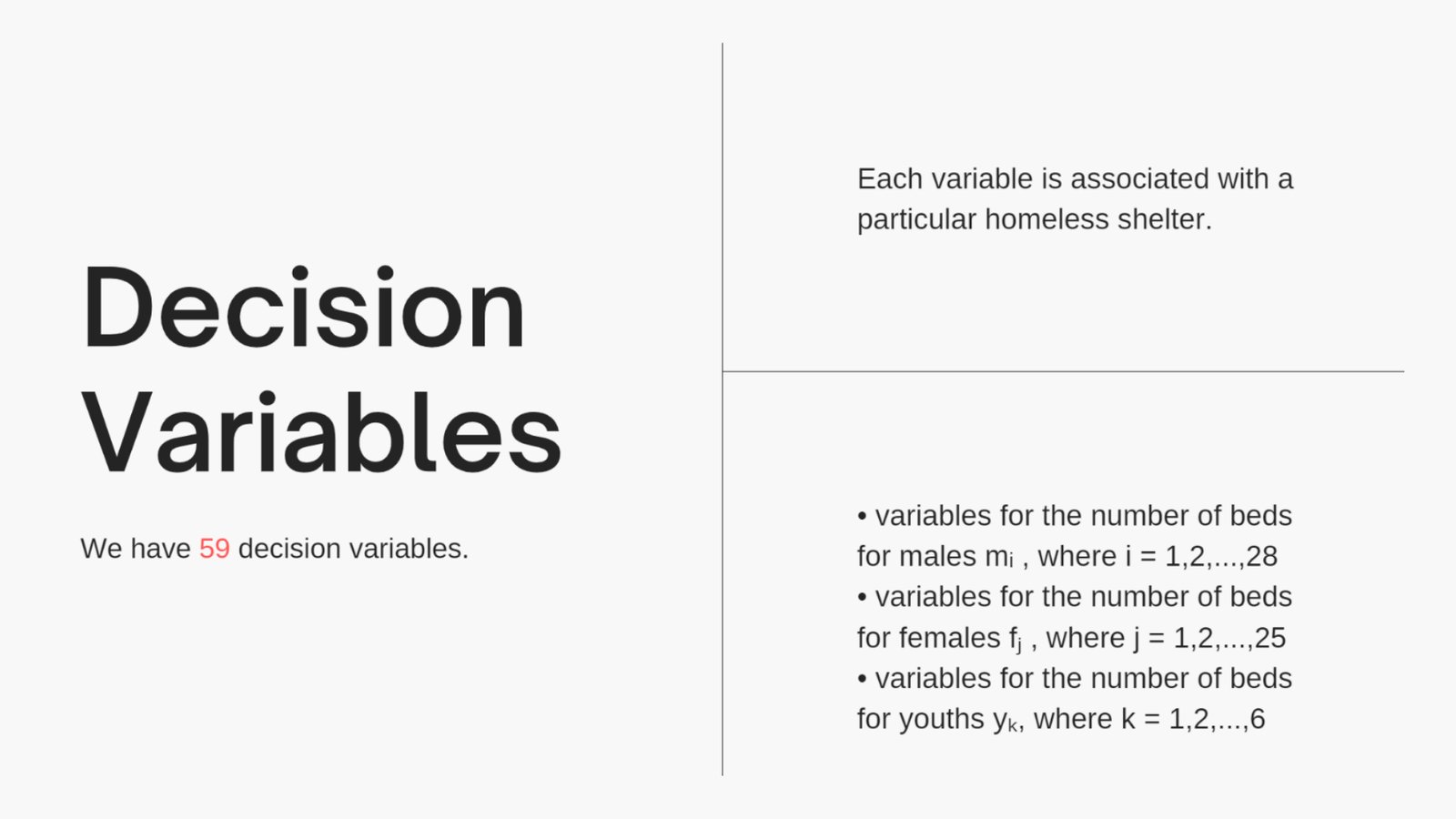
The model has 59 decision variables: the number of beds given to men, women and youth at each shelter. Its constraints come from each shelter’s capacity and who it serves (men only, women only, youth, all genders, or women and youth).
Results
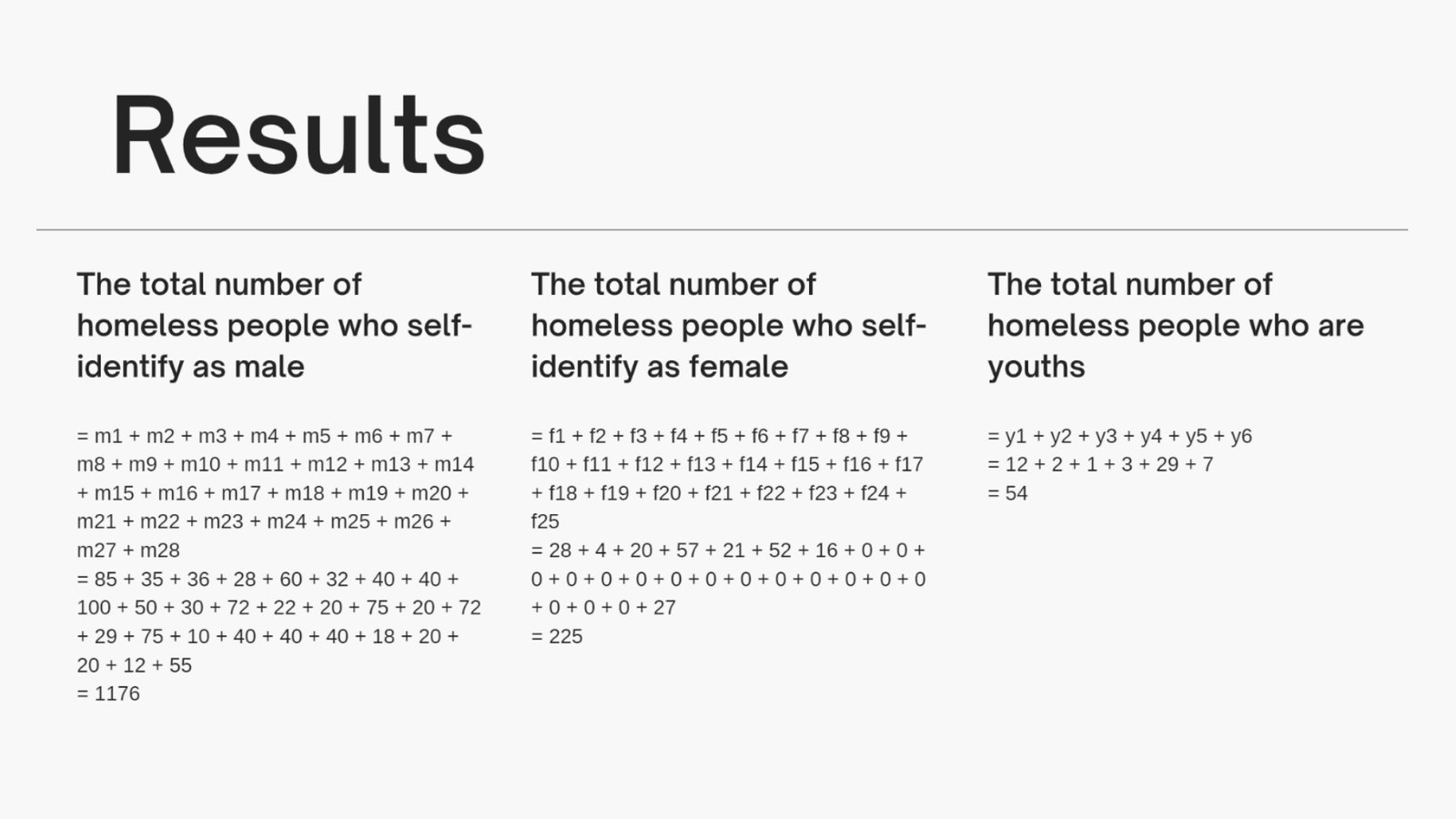
At most 1,176 men, 225 women and 54 youth could be housed in a single night. That leaves about 640 people without a place even when every bed is used, which is the gap more shelter funding would need to close.